

PRODUCT DESCRIPTION
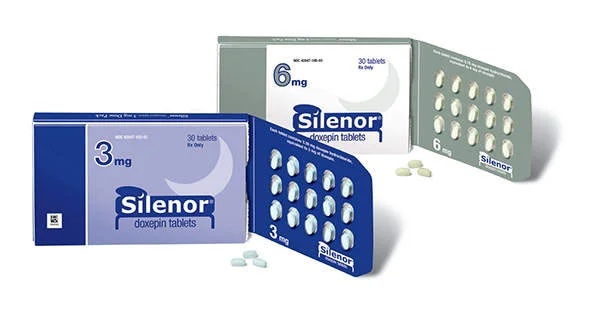
Silenor belongs to a group of drugs called hypnotics.
Silenor is used to treat insomnia in people who have trouble staying asleep.
This medication guide provides information about the Silenor brand of doxepin. Sinequan and other generic brands of doxepin used to treat depression or anxiety are not covered in this medication guide. Silenor for sale
DOSAGE METHOD
For the treatment of major depression and/or anxiety, including psychotic depressive disorders with associated anxiety. Silenor for sale
Oral Dosage
Adults
Initially, 75 mg/day PO given as a single dose at bedtime or in 2 to 3 divided doses. May increase gradually depending on response and tolerability. It is advisable to initiate at the low end of the dosing range in the geriatric patient; slowly titrate and closely observe for adverse anticholinergic effects or oversedation. Usual effective dose: 75 to 150 mg/day PO. Higher doses of up to 300 mg/day PO may be required in more severely ill patients. If more than 150 mg/day PO is required, give in divided doses. Patients with mild symptoms may respond to doses as low as 25 to 50 mg/day PO.
Adolescents
Safety and efficacy have not been established. Weight-based dosing has been described: 1 mg/kg/day to 3 mg/kg/day PO in single or divided doses, start at lower dosage and titrate slowly at weekly intervals. A suggested initial dose is 25 mg/day to 50 mg/day PO. Use lowest effective dose. Do not exceed 3 mg/kg/day PO; usually do not exceed 100 mg/day PO. Tricyclic antidepressants (TCAs) are not drugs of choice for adolescents with depression; there is lack of high-quality data to support efficacy and safety.
For the treatment of insomnia characterized by difficulties with sleep maintenance.
Oral dosage (doxepin 3 mg or 6 mg tablets; e.g., Silenor tablets)
DOSING CONSIDERATIONS
Hepatic Impairment
Dosage adjustment needed in hepatic impairment but specific guidelines are not available for most formulations. For capsules and oral solution (Sinequan), use reduced initial dosage and adjust gradually according to clinical response and tolerance. For tablets (Silenor), initiate at 3 mg/day in patients with hepatic impairment and monitor for adverse effects.
Renal Impairment
Specific guidelines for dosage adjustments in renal impairment are not available; it appears that no dosage adjustments are needed.
What other drugs will affect Silenor?
Taking Silenor with other drugs that make you sleepy or slow your breathing can increase these effects. Ask your doctor before taking Silenor with a sleeping pill, narcotic pain medicine, muscle relaxer, or medicine for anxiety, depression, or seizures.
Before taking Silenor, tell your doctor if you have used an “SSRI” antidepressant in the past 5 weeks, such as citalopram, escitalopram, fluoxetine, fluvoxamine, paroxetine, or sertraline.
NEGATIVE EFFECTS
Get emergency medical help if you have any of these signs of an allergic reaction to Silenor: hives; difficulty breathing; swelling of your face, lips, tongue, or throat.
Call your doctor at once if you have:
blurred vision, tunnel vision, eye pain or swelling, or seeing halos around lights;
fast, pounding, or uneven heart rate;
confusion, hallucinations, unusual thoughts or behavior, seizure (convulsions);
new or worsening symptoms of depression (mood or behavior changes, anxiety, trouble sleeping, feeling agitated, thoughts about suicide or hurting yourself.
Some people using this medicine have engaged in activity such as driving, eating, or making phone calls and later having no memory of the activity. If this happens to you, stop taking Silenor and talk with your doctor

Reviews
There are no reviews yet.